What Is Measles?
Measles is an acute, highly contagious viral illness that spreads through respiratory droplets and airborne transmission. It is one of the most contagious infectious diseases known — more than 90% of unvaccinated or susceptible individuals exposed to measles will become infected.
The incubation period typically ranges from 7 to 14 days after exposure.
Measles Symptoms and Clinical Presentation
Early Symptoms (Prodrome Phase)
Measles often begins with a prodrome, which may include:
- High fever
- Cough
- Runny nose (coryza)
- Conjunctivitis (red, irritated eyes)
During this phase, small Koplik spots — bluish-white lesions inside the mouth — may appear and are a classic sign of measles infection.
Measles Rash
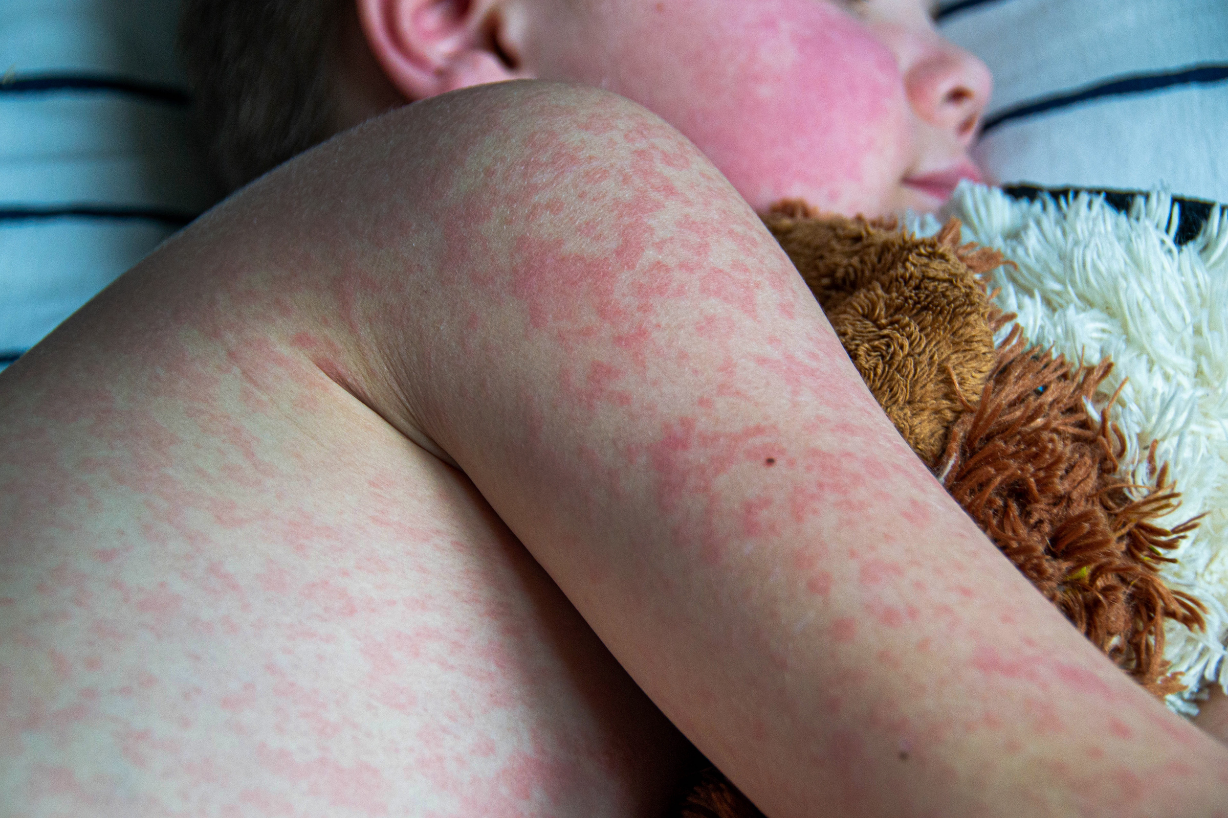
A few days later, a blotchy red rash develops, typically:
- Starting on the face
- Spreading downward to the trunk and extremities
Patients are considered infectious from 4 days before to 4 days after the rash appears, which contributes to rapid spread.
Measles Complications and Risks
Complications from measles are common and can be serious. These may include:
- Ear infections
- Pneumonia
- Diarrhea
- Encephalitis (brain inflammation)
Certain groups are at higher risk for severe illness, including:
- Young children
- Adults over age 20
- Pregnant individuals
- Immunocompromised patients
Measles also causes temporary immune suppression, which can increase susceptibility to secondary infections for weeks to months after recovery.
How Measles Is Diagnosed and Treated
Diagnosis
Measles is diagnosed based on:
- Clinical symptoms and exposure history
- Blood tests detecting measles-specific antibodies
- Viral testing from respiratory swabs
Treatment
There is no specific antiviral treatment for measles. Management is supportive and may include:
- Fever control
- Hydration
- Monitoring for complications
In children, vitamin A supplementation is recommended to reduce the risk of severe outcomes.
Preventing Measles: The MMR Vaccine
What Is the MMR Vaccine?
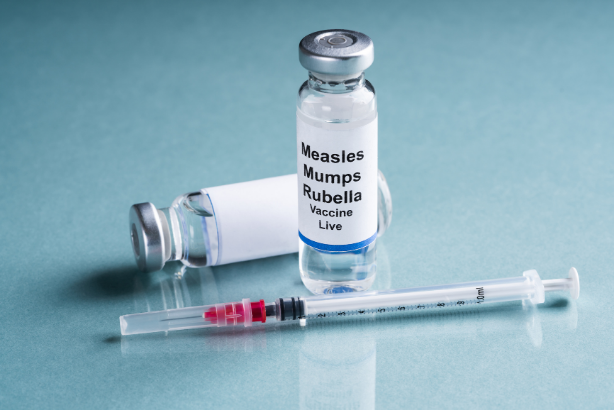
The measles-mumps-rubella (MMR) vaccine protects against three viral infections and is the most effective way to prevent measles and its complications.
The vaccine is highly effective and has an excellent safety record.
MMR Vaccine Schedule (ACIP Recommendations)
Children:
- First dose: 12–15 months
- Second dose: 4–6 years
Adults:
- Adults born in 1957 or later without proof of immunity should receive at least one dose
- High-risk adults (healthcare workers, international travelers, college students) should receive two doses, spaced at least 28 days apart
When to See a Primary Care Provider
You should contact a healthcare provider if:
- You or your child have symptoms suggestive of measles
- There has been a known exposure
- You are unsure about vaccination status
- You need guidance on MMR vaccination
Prompt evaluation helps protect both the patient and the community.
Protecting Your Family and Community
Vaccination remains the cornerstone of measles prevention. High vaccination rates protect vulnerable populations, including infants and those who cannot be vaccinated due to medical conditions.
For more information, you may find these resources helpful:
Need Care or Vaccine Guidance?
At McCrimmon Primary Care Plus, we provide:
- Pediatric and adult primary care
- Vaccine review and counseling
- Sick visits and same-day care when appropriate
- Care for the whole family under one roof